Event
TIC Hackathon 2.0
A full-stack voice-powered document Q&A system that lets healthcare professionals interact with medical documents through natural voice conversation. Built with RAG, OpenAI Whisper, and React in under 24 hours.
EchoMind is an award-winning voice-powered document Q&A system developed during TIC Hackathon 2.0 (October 24–25, 2025). The application combines speech recognition, vector embeddings, and large language models to create an intelligent assistant that can understand, search, and answer questions about uploaded documents.
Built with a focus on healthcare professionals, EchoMind lets users upload medical documents (PDF, DOCX, PPTX), ask questions using their voice, and receive spoken responses with source citations. The system uses Retrieval-Augmented Generation (RAG) to provide accurate, context-aware answers.
Healthcare professionals often need quick access to information buried within large documents. Traditional methods require:
EchoMind addresses these pain points by providing:
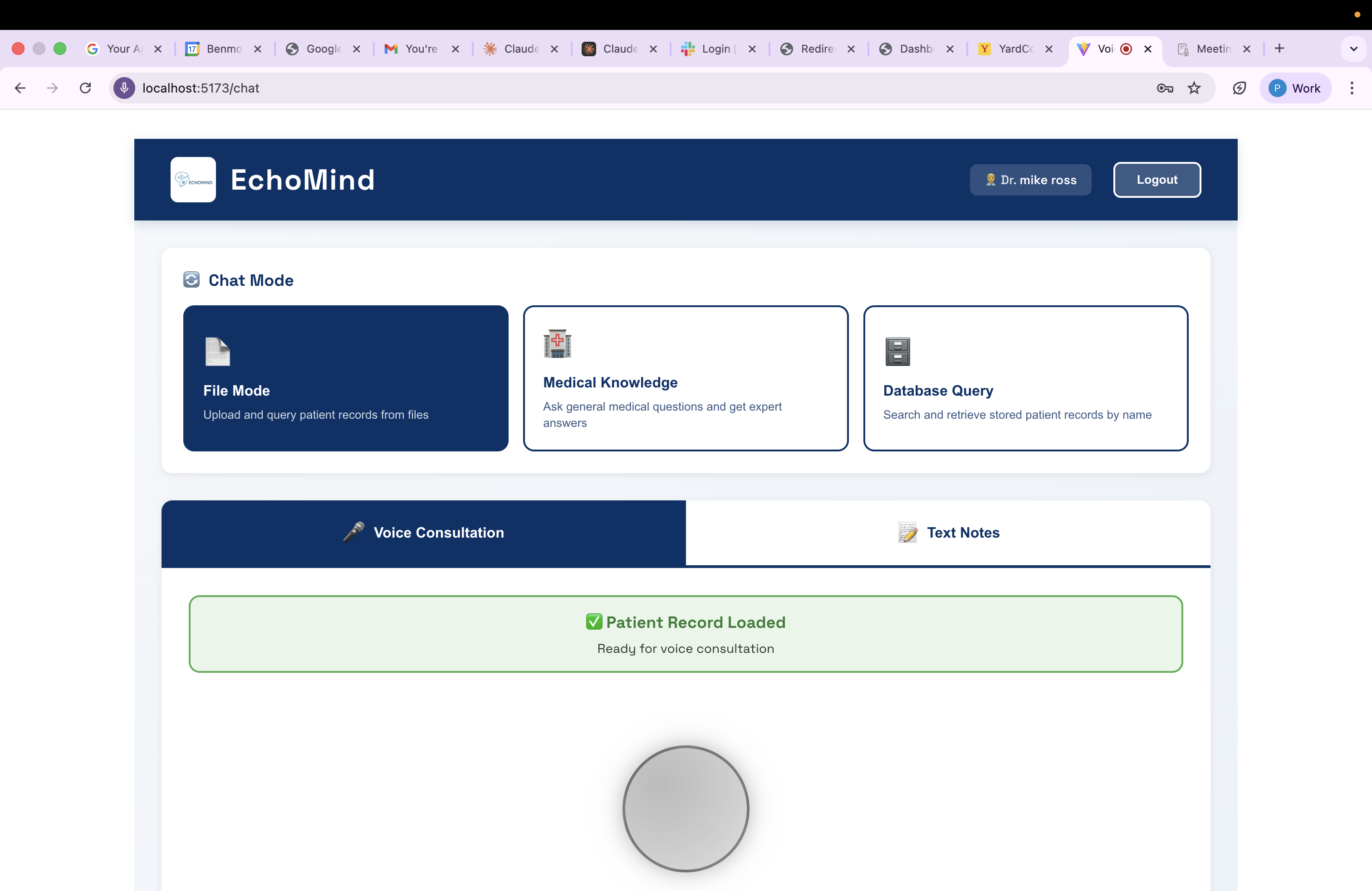
Record voice questions using the browser microphone with real-time transcription via OpenAI Whisper. Natural text-to-speech responses with auto-silence detection.
Semantic search using OpenAI embeddings (1536 dimensions) with a ChromaDB vector database. Smart text chunking with overlap for context preservation.
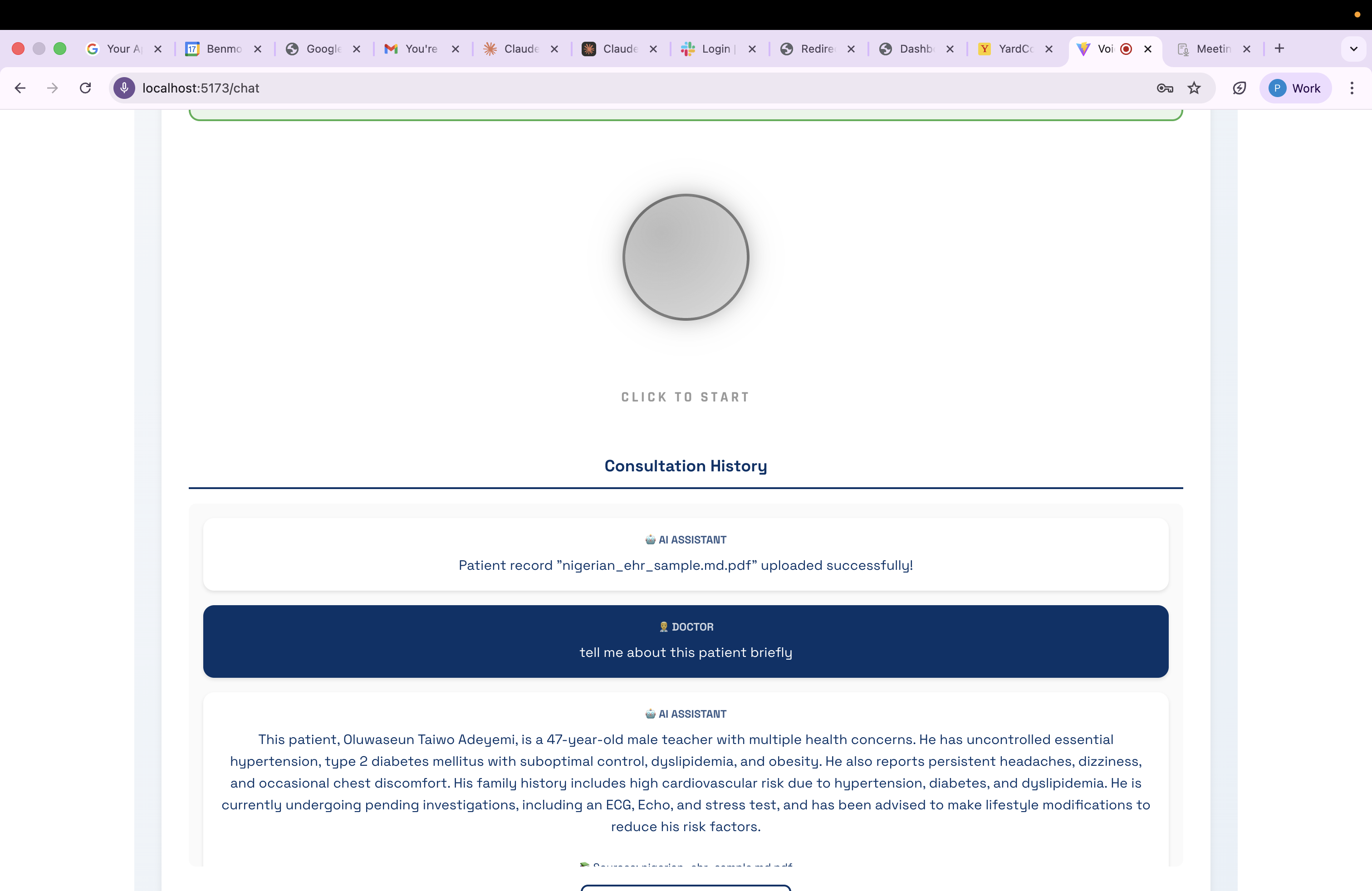
Upload PDFs, Word documents (.docx), and PowerPoint presentations (.pptx). Drag-and-drop interface supporting files up to 50MB.
Beautiful UI with 5 animated states: idle, session, listening, speaking, processing. Ripple effects and pulsing animations for visual feedback.
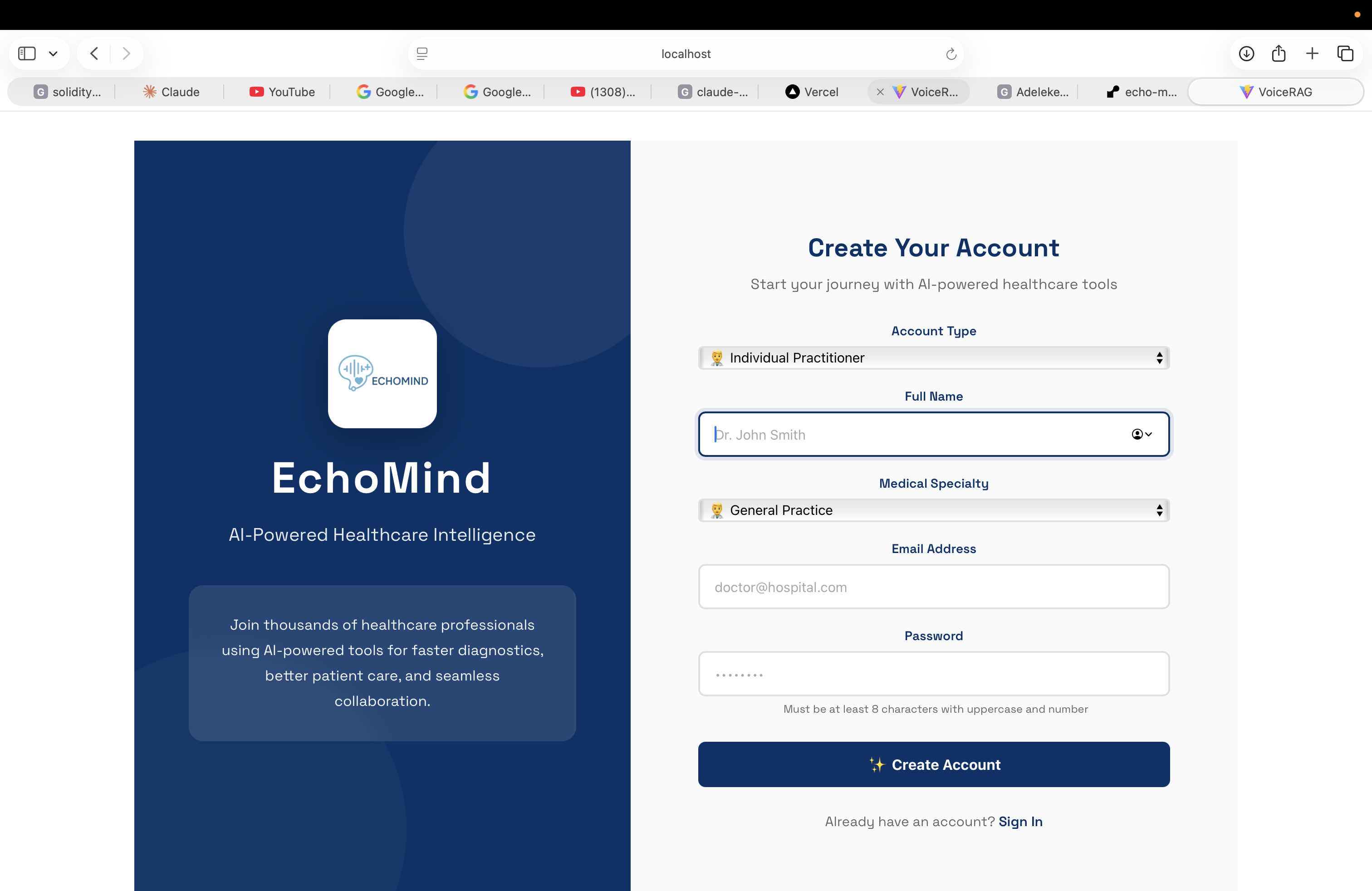
JWT-based auth with Individual and Organization account types. Role-based access control (owner, admin, member) with password-strength validation.
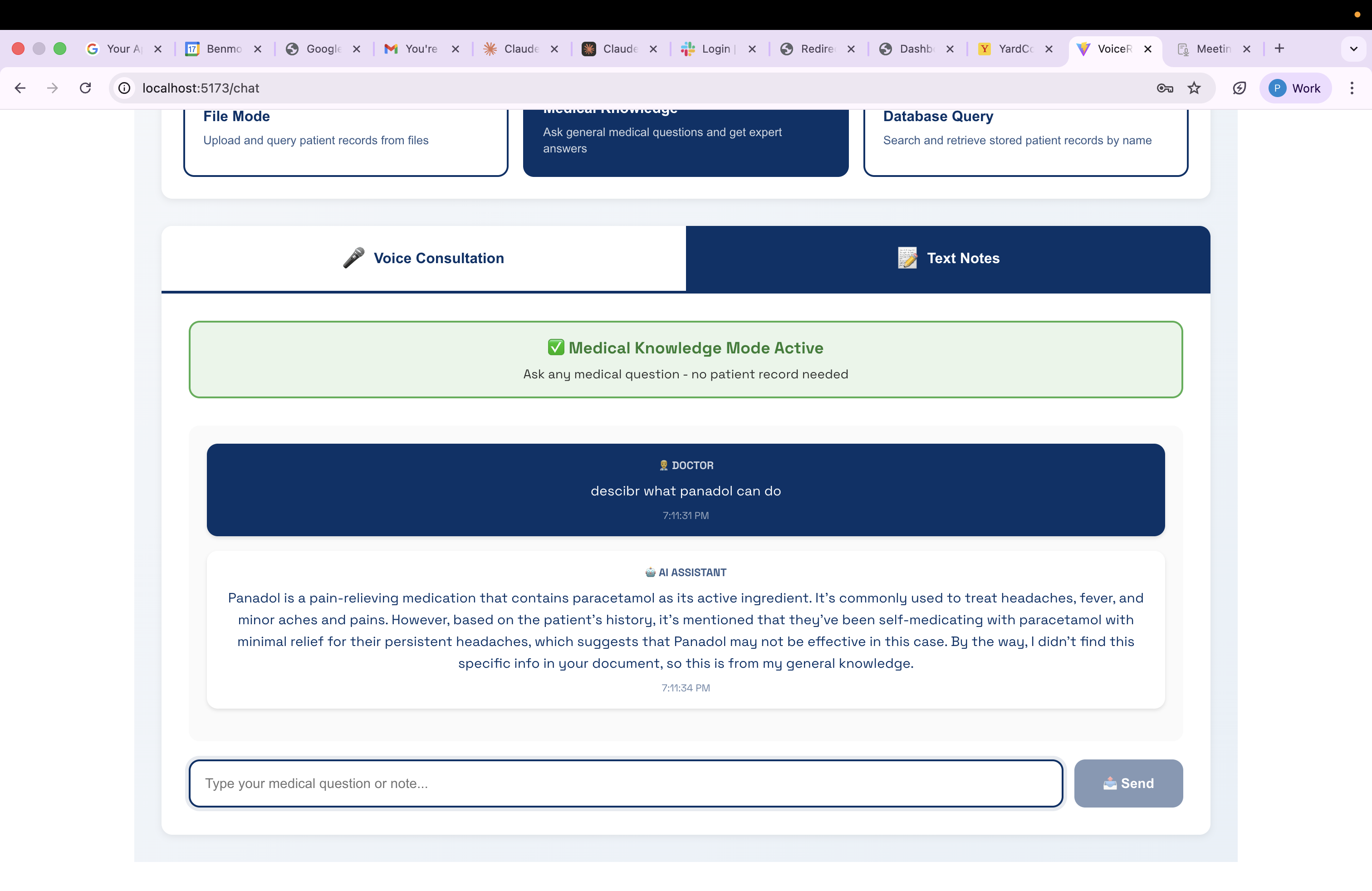
File Mode for document queries, Medical Knowledge for general questions, and Database Query for patient-records search.
Visual overview of the EchoMind platform interface.
Implementing vector embeddings for semantic search, chunking strategies with overlap for context preservation, and balancing retrieval precision with LLM context windows.
Integrating the browser MediaRecorder API for audio capture, working with OpenAI Whisper for accurate speech-to-text, implementing TTS with multiple voice options, and handling audio streaming in the browser.
Designing REST APIs with FastAPI, managing state between the React frontend and Python backend, implementing JWT authentication with refresh tokens, and handling file uploads and processing pipelines — all in 24 hours.
Prompt engineering for query refinement, two-pass systems for error correction, handling API rate limits and retries, and optimizing token usage and response quality.
Understanding compliance considerations, the importance of disclaimers, and how to present medical information responsibly without overstepping into diagnosis.
As the backend developer in our 4-person team, I was responsible for building the core infrastructure that powers EchoMind:
I'm always excited to discuss new projects and opportunities in AI, healthcare tech, or full-stack development.